_underground & variable
In Zusammenarbeit mit :
Merlin Ehlers
David Bissels
Prof. Charbonnet
Prof. Heiz
HS 24
ETH ZÜRICH
The Cambridge Dictionary defines the adjective "underground" as: Under the Surface of the Ground.
To go underground is a primordial form of protection and has to do with our most archaic instincts. Just like climbing a tree, or seeking height to escape the danger on the ground level, humans have reworked the ground to hide from and derive danger through earth.
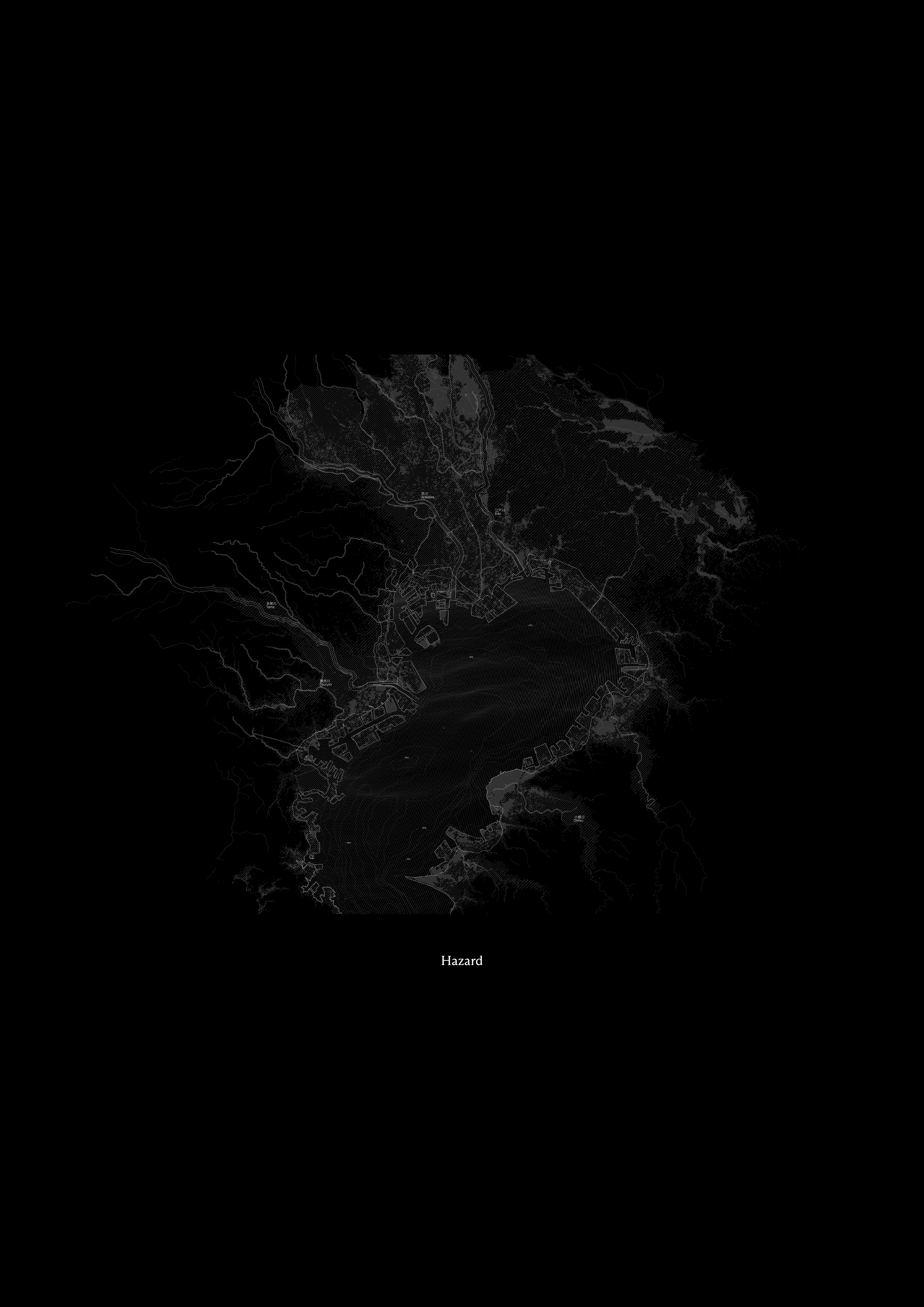
In and around Tokyo engineers have reworked the surface as well as the underground, not only to hide from danger, but to orchestrate the entire natural water system. Rivers on the Surface are channelled and directed, while gigantic underground water derivation systems organize the levels and distribution of water above.
Our Survey maps these underground systems and depicts the hazardous potential of water in the entire Tokyo bay region. In case of rising water levels, both from the ocean and the rivers, large territories of the city are threatened by flooding. To counteract this Hazard, and to generate more land for an over densified mega city, the coastline of tokyo bay has been reworked over centuries. New Canals were built, rivers were straightened and redirected and many areas close to the water are defined by embankments and floodplains.
Even with all these measures, the region is still facing a growing amount of unpredictable and varying challenges. Depicted here is a scene from the 2015 Tropical Storm Etau which lead to the evacuation and a further evacuation advisory for two and a half million people. Through strict confinement, the variable that is water, is to be controlled.
Something that can change, especially in a way that can not be known in advance. Variable entities are not consistent and do not have a fixed pattern, they are always liable to change.
In ancient Japan, the variability of water is portrayed through Ryūjin (龍神), the dragon god of the sea and the rivers. Ryūjin came from the sea and connected earth and water, moving through the land like a snake, swirling chaotically like a typhoon and expressing his power through heavy rainfalls and floodings. This historic development depicts the anthropocenes duality, a picture of Humans against Nature. The natural force of
water, Ryujin, tamed and separated through technology. The danger orchestrated, either hidden under ground or
observed from safe distance. Tokyo’s cityscape has developed like a living organism, expanding not only along the rivers and coastline but also into and over them. From the Coastline facing the open ocean to the waterbottle inside a fridge, the flow of water is controlled and engineered. Interactions and experiences with the variable are limited. To prevent Stormsurges and Tsunamis from causing existential Damage, large walls act as shields along the coastline.
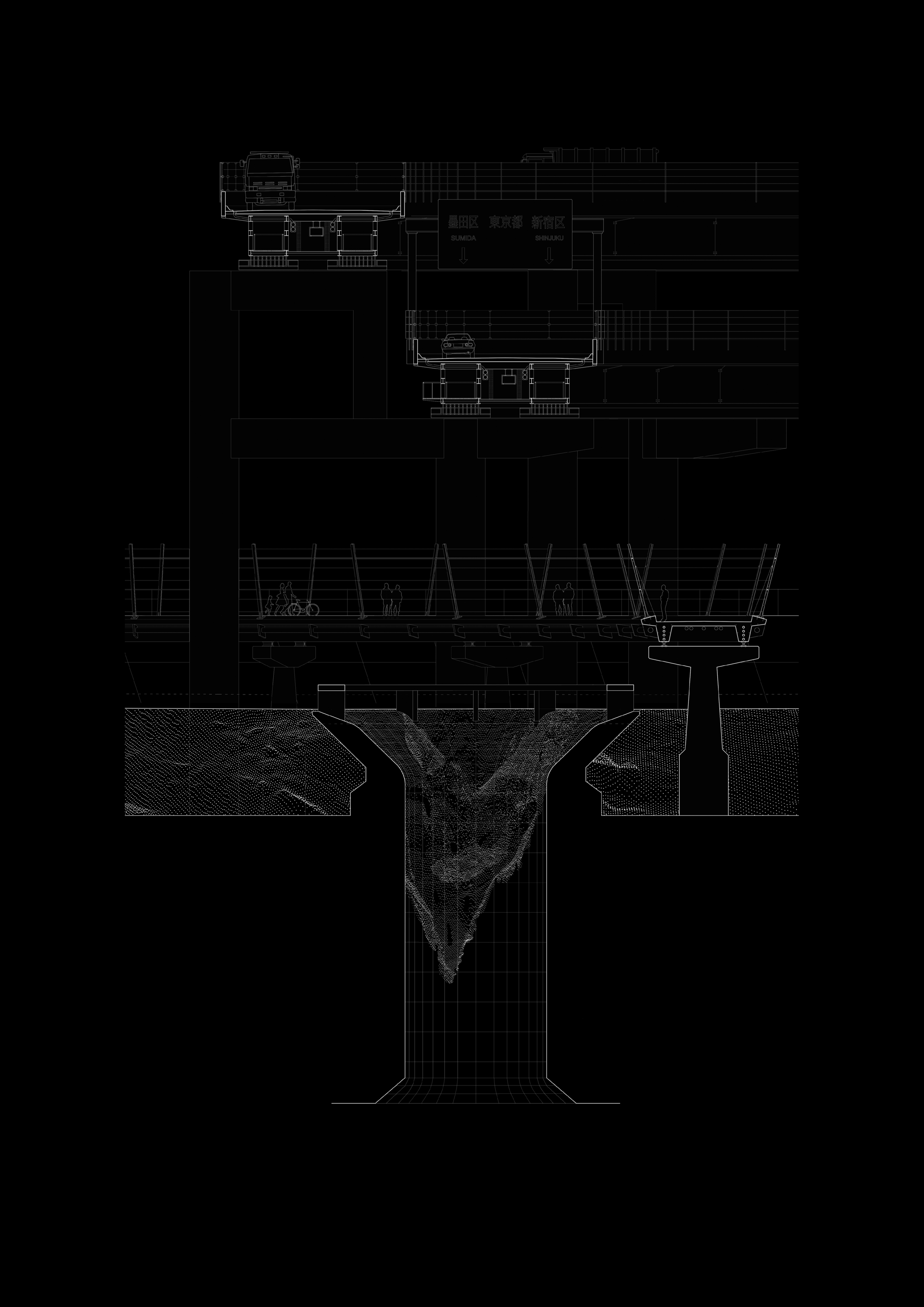
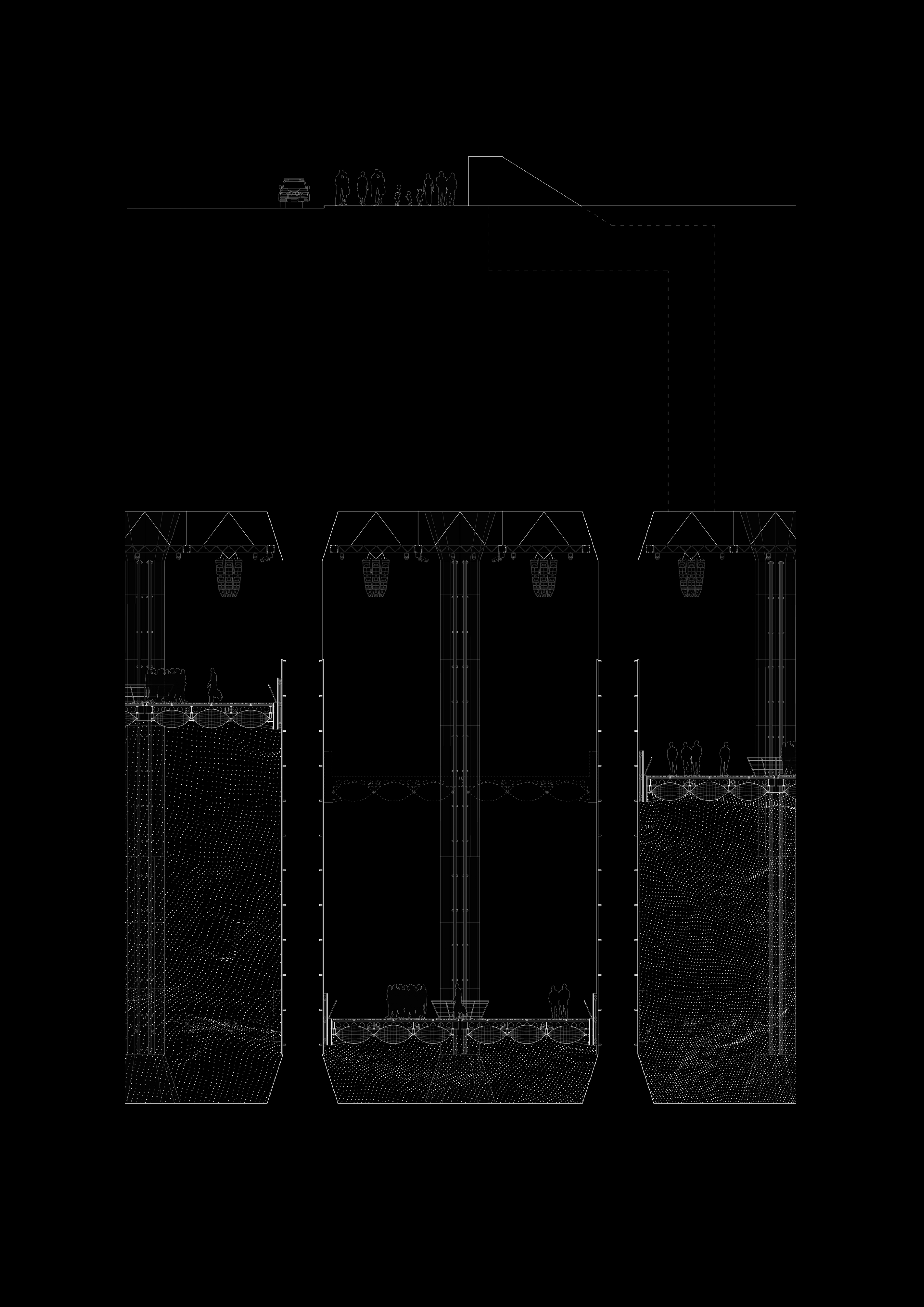
They separate and shield not only from danger, but also from any chance of non dangerous relation. Hidden Spillways underneath Bridges and on the boundaries of river banks lead overflowing Water away from urban areas and streets into massive spaces like the G-Cans, one of the largest underground flood control systems in the world. It is capable of holding approximately 670,000 cubic meters of water.
The strict dualism between controlled and variable, water and city, risk and safety, is an opportunity to create interaction exactly within this separation.
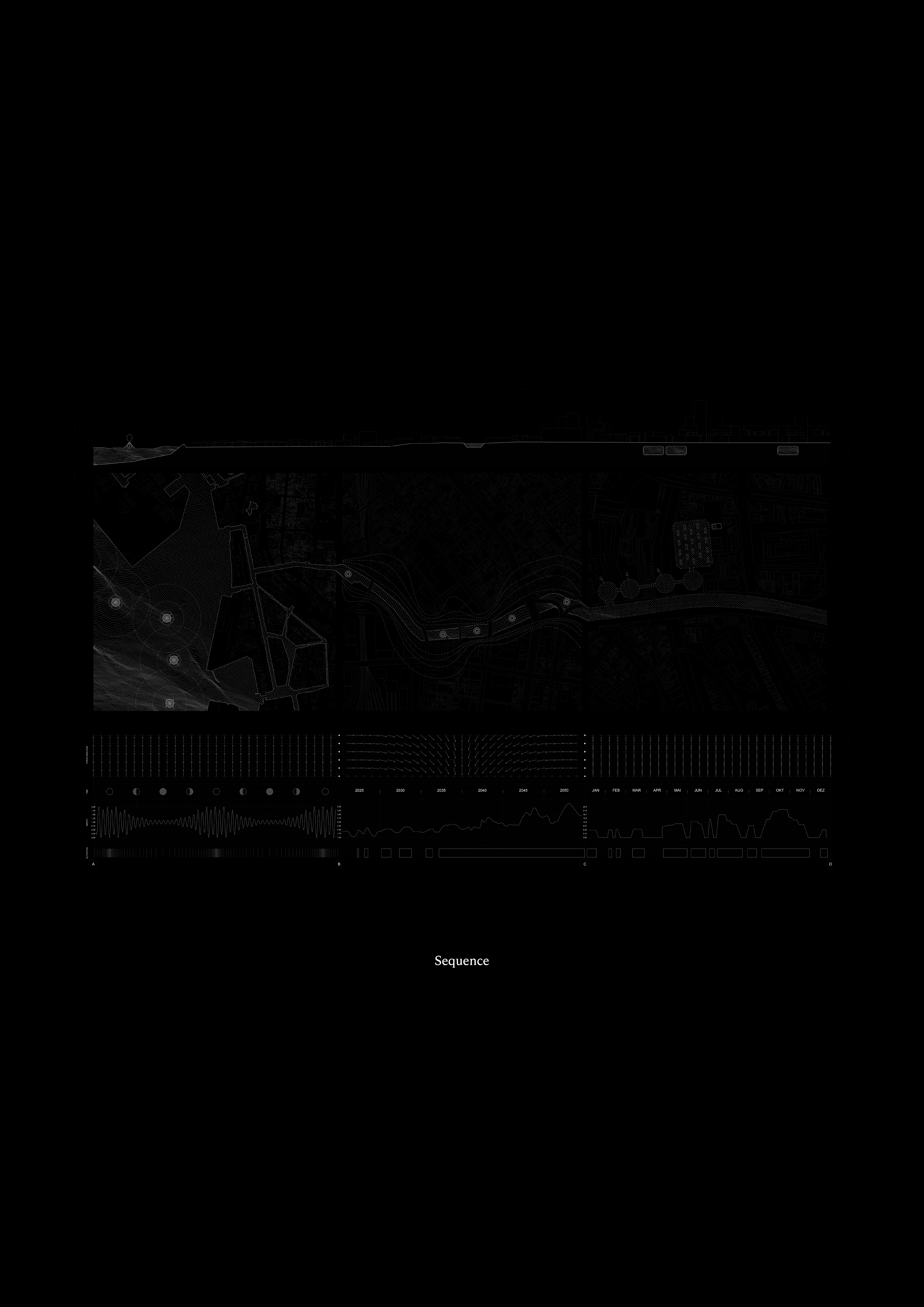
Within those three situations - at the coast, along the river and inside the reservoir - the waters forces, directions and temporalities drastically differ.
The Sequence begins with the constant but ever changing cycle of ocean tides. Defined by Gravity, a slight rise and fall marks highs and lows behind a concrete wall.
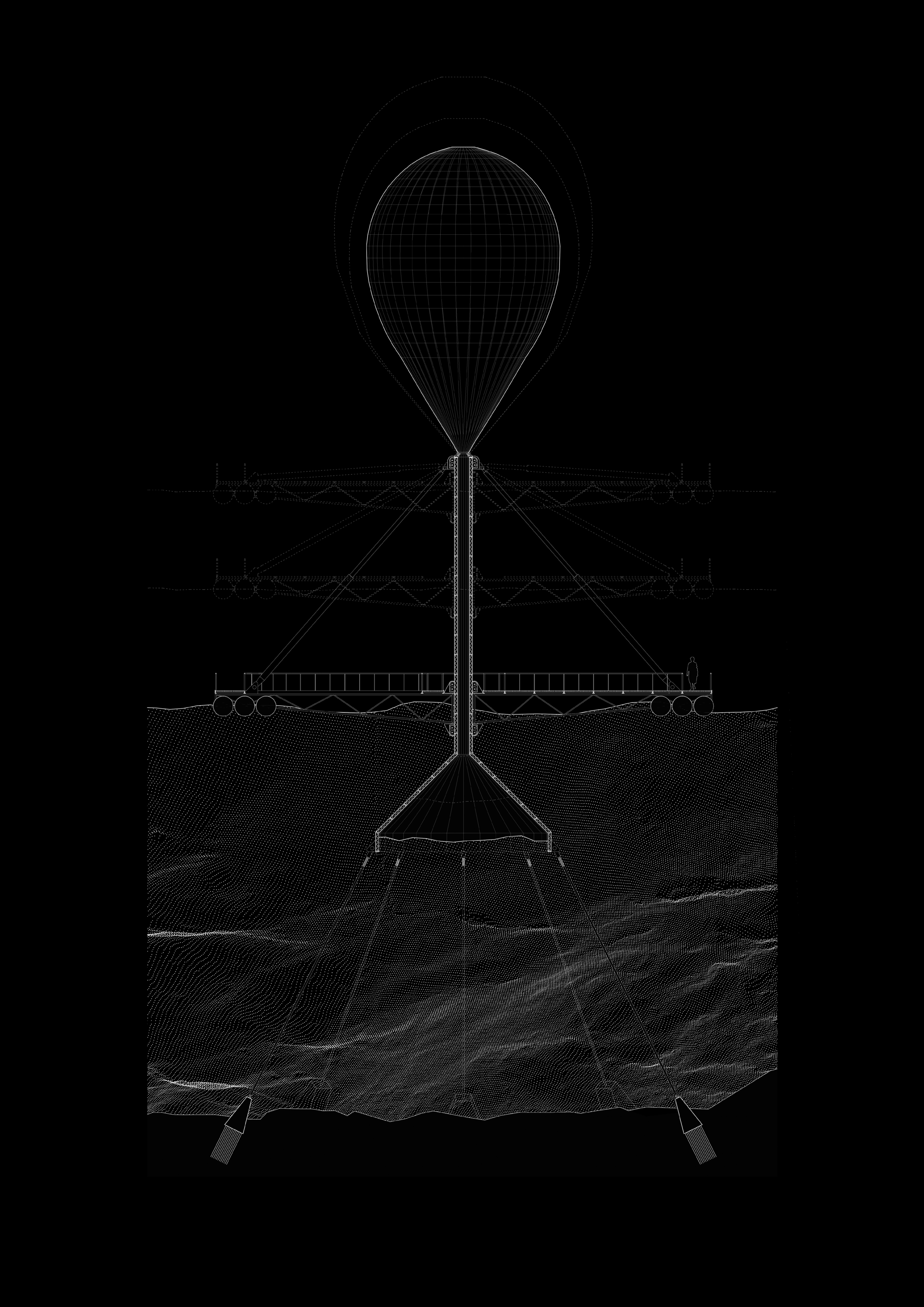
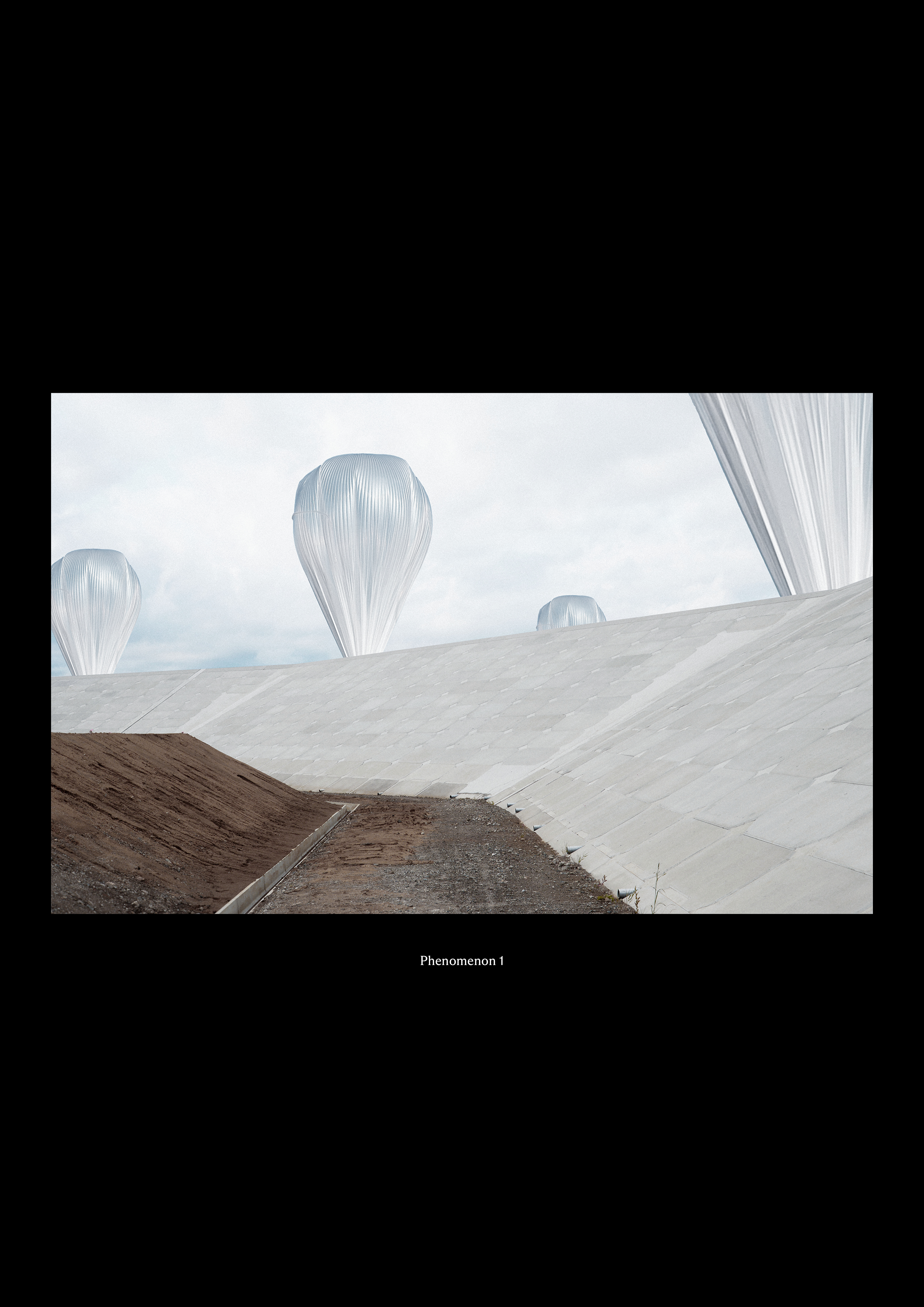
Visible behind the city's massive shields,an inflatable balloon is mounted atop a steel Cone filled with compressed air. The rise and fall of the ocean tides, storm surges or even tsunamis is used as a compressing force, pushing air from the cone into the balloon, inflating and deflating - breathing.The Phenomenon enables the structure to act as an indicator of the water's slightest movements.
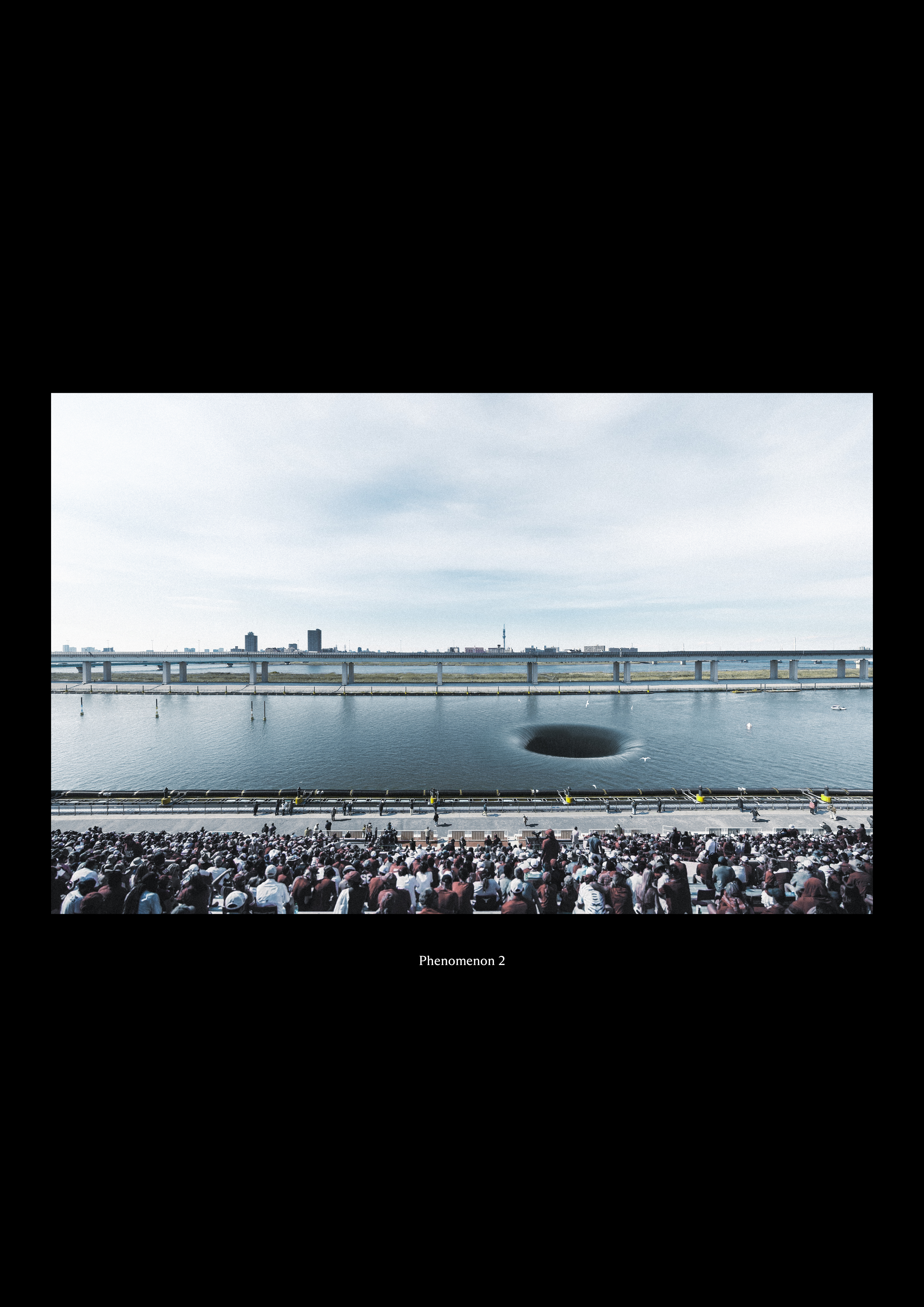
Nourished by seasonal rain and snowmelt, the rivers levels are expected to rise due to the changing climate. The implementation of overflow Spillways will soon increase and turn into a regularly reccuring scene. Standing on a bridge one looks down at the edge of a waterfall, into the threshold of water management. A gate to total control, a runoff spillway at the centre of an engineered river. The water reaches maximum height, cascading down into the underground.
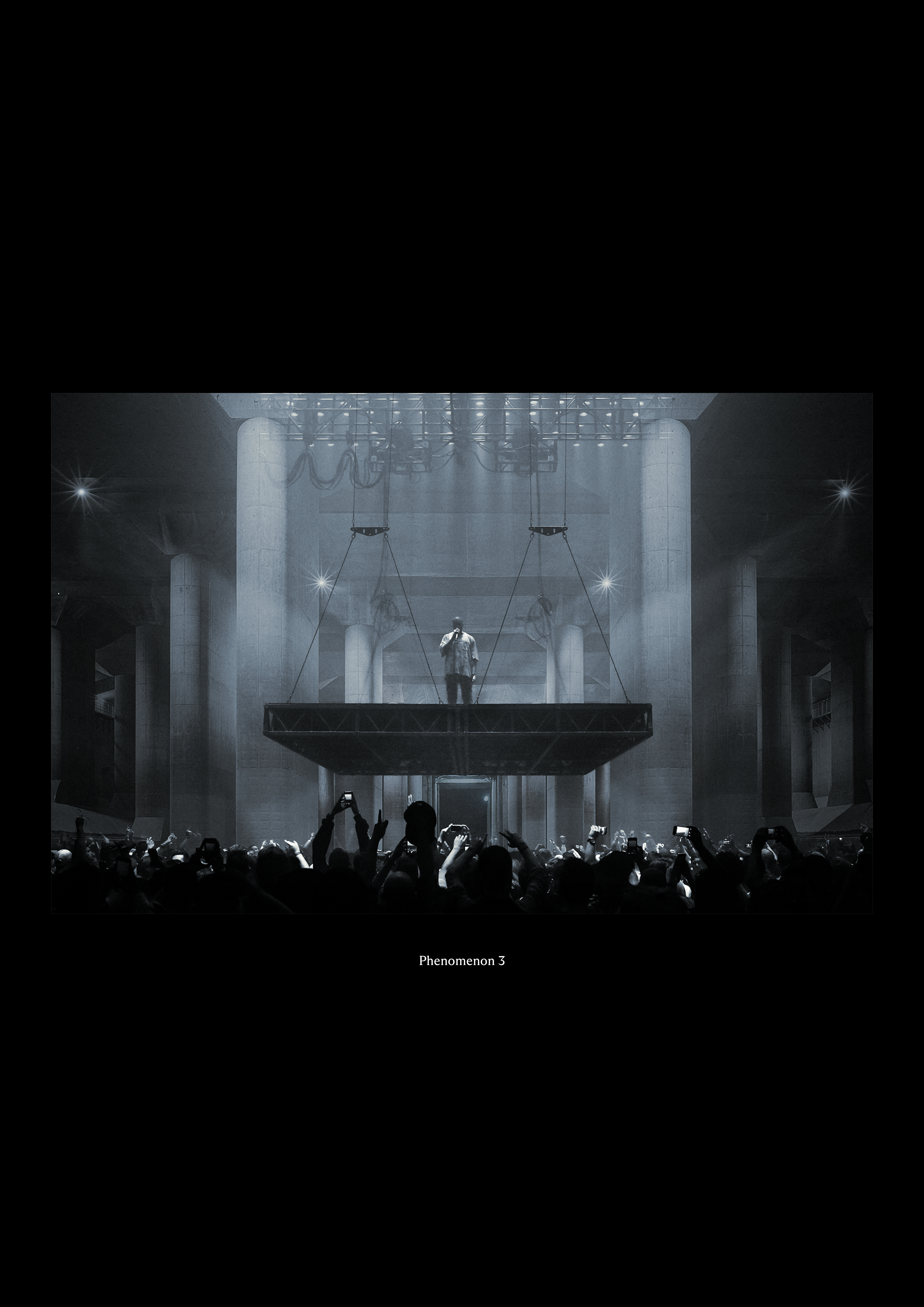
The need for water storage and its capacity is predicted to rise. The mechanism of controlled underground flooding and emptying of reservoirs might soon be a reflection of the weather conditions above. After heavy rainfall, a performance starts on a floating platform at the top of the G-Cans. The sound blares loud, the space is compressed. During the performance the platform and the water level steadily sink, altering the acoustics to that of a cathedral and revealing the sheer scale of both the unimaginably vast space and rainfall amounts.
The Promise blurs the boundaries between risk management, control and an experienceable, interactive relationship with water in the urban context of Tokyo. It openly questions the relations and methods of the anthropocene by staging them in new scenes.